
Managing an Office Social Event is something most of us get asked to do at some point as Executive Assistants. Whether it’s the Christmas party, a summer get-together, or simply organizing team drinks, we’re often the ones who take the lead. Managing an office social event can feel like juggling project management, logistics, and people skills all at once, but with a clear plan, it doesn’t have to be overwhelming. In this guide, we’ll explore the process of managing an office social event from start to finish, breaking it down step by step so you know exactly what to do. Together, we’ll explore how to create a fun, inclusive, and memorable experience for your colleagues, without the stress taking over, so you can enjoy it too.
Before you jump into venues or catering, the first step in managing an office social event is to get crystal clear on the brief. Think of this as setting the foundation. Without it, everything else will be slightly wobbly. When we clarify the brief, we ensure that everyone involved agrees on the purpose, the participants, and the parameters. This saves you time later and stops endless back-and-forth.
Here’s what to cover:
Purpose
Why are we planning this? Is it to boost morale, celebrate a milestone, strengthen cross-team connections, support a charity, or welcome new hires? Getting agreement here helps you design the event in a way that feels meaningful to your Organization.
Audience & Headcount
Is this a full-company event, just one department, or a smaller team? Will it include hybrid or remote colleagues? Are plus-ones allowed? Knowing the audience will shape everything from venue size to catering style.
Budget & Approval Path
What’s the total budget, and how much does that work out per head? Who signs off on spending? What’s the payment process and deadline for changes? Laying this out upfront prevents surprises later.
Date Window & Timing
Check for conflicts such as quarter-end reporting, school holidays, religious festivals, or major sporting events. The best dates are ones where most people can attend without stress.
Success Metrics
Decide how you’ll measure success. It could be the percentage of RSVPs, post-event survey scores, cost per head, total funds raised, or softer goals, such as “colleagues met three new people.” These benchmarks will help you prove the value of the event afterward.
Deliverable
Wrap this into a simple one-page Event Overview: purpose, audience, budget, date window, success metrics, and decision owners. This document serves as your guiding principle throughout the planning process.
When we start managing an office social event with a clear brief, everything else becomes easier. You’ll make better decisions, avoid costly mistakes, and keep leadership confident that you’re on top of it all. This is the groundwork that sets up every successful event, regardless of its size or type.
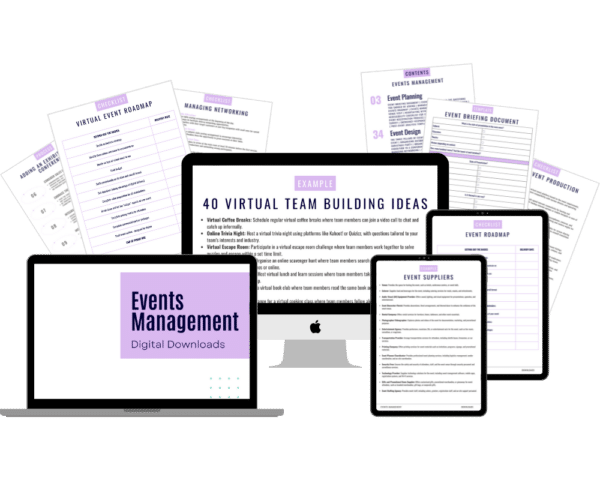
The digital materials provided in this bundle will equip you with the skills and strategies needed to excel in event planning and execution.
Once you’ve got the brief, the next step in managing an office social event is deciding on the right format. This is where you match the purpose to the type of event. A format gives structure and sets expectations, so people know what they’re turning up for. Skipping this step often leads to events that feel flat or disjointed.
Here’s how to approach it:
Connect & Mingle
If the goal is connection, keep it casual. Consider a drinks reception with a light activity, such as a photo scavenger hunt or conversation cards. Simple, low-pressure, and a good way to break the ice.
Celebrate
For milestones or big achievements, go a little bigger. A dinner, a short set of awards, and a DJ or band create the sense of occasion people expect.
Team Build
Assistants are often tasked with organizing team-building events. If you need collaboration, choose a structured activity. A facilitated workshop, escape room, or cook-along paired with pizza or a food truck helps people work together while still enjoying themselves.
Give Back
Charity challenges are great for purpose-driven socials. Plan a fundraiser, donation matching, or a short showcase moment to highlight the impact of the cause.
Low-Lift Bonding
Not every gathering needs to be huge. Monthly coffee carts, birthday cakes, or a quick pub quiz keep morale high without heavy planning.
When we pick the right format, managing an office social event becomes far more straightforward. You’re matching intent to design, which means the end result makes sense to your colleagues and lands well. This is one of the quickest but most important steps in managing an office social event, because once you know the format, everything else, from the venue to the food, slots into place.
The third step in managing an office social event is to map out a realistic timeline. A good timeline keeps you in control, avoids last‑minute panics, and makes sure nothing slips through the cracks. It also gives your executives and colleagues confidence that you have everything handled. Don’t worry, this doesn’t have to be complicated. Here’s a straightforward structure you can adapt depending on the size and scale of the event.
8–10 weeks out (or 12+ for peak December/June)
Lock the date window with your Executive.
Shortlist venues (check capacity, accessibility, transport, AV, catering rules).
Pencil‑hold your top choice.
Draft the budget with 10–15% contingency built in.
6–8 weeks out
Confirm the venue and pay deposits.
Choose catering style (bowl food, buffet, sharing platters, or seated).
Select the main activity or entertainment.
Draft the run sheet and assign roles.
Send save‑the‑date or calendar holds.
4–6 weeks out
Send invitations with an RSVP deadline.
Collect dietary and accessibility requirements.
Book a photographer or booth if needed.
Plan décor, signage, and comms.
Arrange licensing or security if alcohol or a late finish is involved.
2–3 weeks out
Finalize numbers and seating or team plans.
Brief suppliers on delivery windows and load‑in routes.
Draft emcee notes and award scripts.
Order swag or prizes.
Event week
Reconfirm timings with all vendors.
Print run sheets, guest lists, place cards, and signage.
Pack your event kit (chargers, tape, markers, first aid basics, and all the bits you’ll thank yourself for later).
Event day
Do an early walk‑through and AV test.
Brief staff or hosts on safety and schedule.
Have your welcome team in place 30 minutes before doors open.
Within 48 hours after
Send thank‑yous to speakers, vendors, and volunteers.
Circulate a quick feedback survey (five questions is plenty).
Reconcile the budget and capture lessons learned.
With a timeline in place, managing an office social event feels less like spinning plates and more like following a trusted checklist. Each stage gives you confidence that you’re on track, and it frees up space to focus on the details that make the event memorable.

The fourth step in managing an office social event is getting comfortable with the budget. For many Assistants, this can feel like the most intimidating part, but it doesn’t have to be complicated. Think of it as a simple framework you can adapt to the size of your event. Having a clear budget also gives you confidence when you’re talking to vendors and shows your executive you’re on top of the numbers.
Start with a per‑head frame
Venue £10–£40 | Food £15–£50 | Drinks £10–£30 | Activity/Entertainment £5–£30 | Décor/Print £2–£8 | Photographer £2–£6 | Contingency 10–15%
How to build your budget step by step:
Write down the total amount you’ve been given (or estimate it if you’re still waiting for confirmation).
Break it down into categories like venue, catering, drinks, entertainment, décor, and contingency.
Add a column for “budgeted,” “actual,” and “notes” so you can keep track as you book things.
Update it regularly. A five‑minute update once a week saves you from nasty surprises later.
Cost‑savers to consider:
Afternoon events are cheaper than evenings.
Offer one signature cocktail plus beer, wine, and soft drinks instead of an unlimited open bar.
Bowl food or sharing platters cost less and feel more social than a formal three‑course meal.
Use an in‑house playlist with good speakers for small groups instead of hiring a DJ.
Arrange group transport rather than reimbursing dozens of taxi receipts.
Extra tips for EAs new to budgets:
Always ask vendors for quotes inclusive of VAT and service fees, so there are no surprises.
Don’t be afraid to negotiate; many suppliers build in room for discounts.
Check if your company already has preferred suppliers, as this can save both time and money.
Keep receipts and contracts in one folder, digital or printed, so you can find them quickly.
Build in a small buffer for last‑minute requests (because there will always be one!).
When you get the budget right, managing an office social event feels far less daunting. You know what you can spend, you’re ready for curveballs, and you can confidently report back to your Executive. With practice, you’ll find that budgeting becomes one of the most empowering parts of managing an office social event.
The fifth step in managing an office social event is choosing the right venue and suppliers. This is where all your planning starts to take shape in the real world. The venue sets the tone, and the suppliers are the partners who make sure everything runs smoothly. Get this part right, and you’ve covered half the battle.
What to check with every venue:
Capacity & layout: Can the venue handle your numbers comfortably? What’s the flow between standing and seated areas? Always ask about a wet‑weather plan if you’re outdoors.
Access: Step‑free routes, lifts, gender‑neutral bathrooms, quiet spaces for colleagues who might need them.
Location: Nearby transport links, coach drop‑offs, and parking options. The less complicated it is to get there, the more likely people will come.
Catering rules: Some venues insist on in-house caterers, while others allow external suppliers but charge corkage fees. Get this clear upfront.
AV & tech: Microphones (handheld and lapel), screens, projectors, Wi‑Fi bandwidth, charging points. Test these if you can during your walk-through.
Licences & insurance: Alcohol, music, liability, and risk assessments. Better to double‑check now than panic later.
Sustainability: Reusable serveware, veggie‑forward menus, local suppliers. This is increasingly expected, and it’s also good for your budget.
Before you sign on the dotted line, remember that negotiating is part of managing an office social event. A few smart conversations can save you money, add flexibility, and make life easier on the day.
Ask for tailored rates if you plan to use the space more than once a year.
Check if you can backdate a good rate to earlier bookings.
Consider long-term contracts if your company hosts regular events on a consistent basis. This approach can secure better pricing.
Review contracts slowly and carefully; cancellation terms and hidden fees can trip you up.
Negotiate for “soft benefits” such as flexible setup times, promotional opportunities, or storage space.
Always question the DDR (day delegate rate). What’s included, what isn’t, and what can be swapped out?
Don’t push so low that quality suffers; you’ll feel it on the day, especially if the venue feels it has been low-balled.
Book in off-season months if possible for cost savings.
Only pay for the space you actually need; partial-day bookings are often possible.
Build good relationships with venue staff; they’ll save you stress if something goes wrong.
Choosing suppliers is another key part of managing an office social event. Good suppliers keep things running on time and on budget, and they become your allies when the inevitable last-minute changes happen.
Check references or reviews.
Confirm all quotes are inclusive of VAT and service.
Ask about cancellation policies and insurance.
Make sure their delivery and load‑in times match your schedule.
Create a single supplier contact sheet with mobile numbers for quick access on event day.
Visiting venues in person is one of the most valuable parts of managing an office social event. Photos and brochures only tell you so much. Being on site allows you to see how the rooms flow, test the atmosphere, and determine whether the space truly meets your colleagues’ needs. It also gives you a chance to ask direct questions, meet the staff, and notice details that could make or break the day. Taking the time to do this helps avoid surprises and ensures you choose a venue that supports the goals of managing an office social event.
If possible, look at the rooms in action. Is the main space light and practical?
Taste the food, even if just a sample lunch.
Test the flow: Can guests move easily between sessions, meals, and networking events?
Pay attention to the staff. Are they organized and welcoming? If not during the sales process, they won’t improve on event day.
Don’t get distracted by areas you won’t use (yes, the wedding suite might look lovely, but you’re here for a work event).
Be open to unusual venues; sometimes, the less obvious choice creates the best experience.
With the right venue and suppliers in place, managing an office social event becomes a lot smoother. You’ll know the logistics are covered, the numbers make sense, and you’ve got trusted partners to help deliver. This step really helps you lock in all the details, ensuring you ask all the necessary questions and gather everything you need at this stage, so the event will feel effortless on the day.
This is the part where managing an office social event can get fun, because food and drink shape how people actually experience the event. A great menu and thoughtful options make colleagues feel looked after, while poor planning can leave people disappointed or even excluded. Thinking about service style, dietary options, and drinks early saves stress later and shows your Executive that you have thought through the details. Getting food and drink right is a big part of managing an office social event, because it’s often what people remember most.
You’ve got a few options here, and each comes with different costs and vibes:
Canapés: Small bites served by staff as they circulate. Great for mingling, but higher staffing costs. Works best for short events or receptions.
Bowl food: A mid‑point between canapés and a meal. Small bowls of hot or cold dishes you can eat standing. Quicker service, more filling than canapés, and usually less expensive than seated dinners.
Buffet: Guests serve themselves from a spread. Cost‑effective, especially for larger groups, but slower as people queue. Not ideal if you’re tight on time.
Family‑style: Large platters placed on tables for guests to share. Feels relaxed and interactive. Mid‑range cost and faster than buffets once guests are seated.
Seated plated meal: Traditional three‑course dinner. Formal and memorable, but also the slowest service and the most expensive per head.
Choose the service style based on your audience, budget, and how much structure you want in the flow of the event.
Dietaries
Take this seriously. Dietary needs aren’t something to guess at. Include a short questionnaire with your invitation so you know upfront who requires gluten-free, vegan, or nut-free options (or any other specific dietary requirements). Collecting the details early lets you brief the caterer properly. On the day, clearly label all dishes, provide separate utensils, and make sure everyone feels included and safe.
Drinks
Welcome drink, sensible token system, good non‑alcoholic options, and plenty of water so everyone feels included. People’s drinking habits are changing, and many colleagues no longer drink alcohol at work events. Take time to decide what will work best for your group and the type of event you’re organizing, rather than assuming the default is an open bar.
Allergy safety
Ask your caterer for their allergen matrix. Ensure signage is visible at service points and that staff are aware of the contents of each dish. When you do a site visit, check how seriously the venue takes this. If they don’t bring it up, make sure you ask directly about labels, signage, and how allergy information is communicated on the day.
A run sheet is the working schedule of your event. It lists times, actions, and responsibilities in detail so nothing is left to memory or chance. In managing an office social event, the run sheet is what keeps suppliers, colleagues, and your Executive aligned on the plan. It should cover venue access, supplier load-in, guest arrival, program timings, and close-down. Share it with your Executive, key vendors, and any team members who have roles on the day. When managing an office social event, a clear run sheet ensures that everyone knows where they need to be and when, avoiding confusion and saving you from having to answer the same questions repeatedly. The goal isn’t to make it perfect, but to make it practical: a straightforward map that guides the whole team through the event step by step.
Event: Summer Party (150 people)
Venue access: 15:00 | Arrivals: 17:00 | Close: 22:00
Roles:
Clear communication with attendees is one of the most important parts of managing an office social event. Obviously you want to make sure people know about the event and how to get to the venue but you also want then to know what to expect, feel included, and have the practical details they need to enjoy the event. When you take the time to plan communication properly, you reduce last‑minute questions, avoid confusion, and show that you’re in control. In managing an office social event, communication is your way of setting the tone before anyone even walks through the door.
Before you start sending anything out, think about what your attendees really need to know and when. Clear, timely communication builds excitement, cuts down on repetitive questions, and makes sure no one feels left out. Every message should be short, practical, and easy to act on.
The save‑the‑date is your first official touchpoint with colleagues. It’s important because it locks the event into calendars early and gives people just enough detail to plan ahead. Keep it short, highlight the basics (what, when, where), and add a clear RSVP instruction. You don’t need to share every detail yet, but you do want to make it appealing and easy to respond to.
Summer Party | Thu 18 July, 5–10pm | Riverside Terrace
Street food, garden games, and a DJ. Dietary/access needs? Add them when you RSVP by 28 June.
Before the event, attendees will always have practical questions. Creating a simple FAQ is important because it reduces repeated queries, helps colleagues feel prepared, and ensures everyone has the same information. Keep it short, accessible, and focused on the essentials.
Pre‑event FAQ
Getting there (maps, transport)
Dress code (weather/back‑up plan)
Timings & food
Accessibility & quiet space
Alcohol policy & safe travel home
You have to really think through signage and work with your venue on it. Attendees want to feel looked after. Once inside the event, even the most independent people appreciate being guided clearly on where to go and what to do. Approach it from the mindset that people don’t want to think too hard at a social event; they want it to be obvious. Clear signs, consistent language, and visible placement will set you up for success.
Don’t forget about the post‑event survey. This is where you capture recognition for the event and collect feedback – not only on the venue and food, but also on your organization of it. A quick survey shows colleagues that their input matters and gives you data to improve the next event.
Overall Rating (1–10)
Favourite moment?
Venue/food ratings (1–10)
Met someone new? (Y/N)
One thing we should change next time?
Planning and delivering these events takes effort, but it’s worth it. As Assistants, we know that when managing an office social event, logistics are important, but equally as important is creating an atmosphere where colleagues can connect and celebrate. When you put the basics in place and keep an eye on the details, you set yourself and your Executive up for success. Remember, managing an office social event is also a chance to showcase your organizational skills and influence.
Here are a few final, tactical tips:
Lock the date early, and everything gets easier.
Over-communicate the basics (where, when, what to wear/eat) and you’ll halve the questions.
Two great non-alcoholic drink options are worth more than two extra alcoholic ones.
Put names to tasks. “Someone” never does anything, but people do.
Always have a wet-weather and a “Plan B” backup.
Use these as your quick checklist, and you’ll go into every event feeling prepared and confident. Keep things practical, document your decisions, and share information clearly and concisely. When you approach planning this way, you not only deliver a smooth event but also highlight the value you bring as an EA. Each successful social you run builds your reputation for being organized, thoughtful, and proactive – skills that matter far beyond the party itself.
Share this article:
Join 30,000+ Assistants receiving our carefully crafted weekly newsletter packed with valuable tips, tricks, and insights tailored specifically for Assistants like you.