
Feeling underestimated is something many Executive Assistants experience during their careers. In fact, feeling underestimated can become one of the most frustrating aspects of the role because it affects our self-perception, influences how others view us, and can undermine our confidence when contributing ideas and expertise.
As EAs, we often have a unique view of the organisation that few others have. We manage complex schedules, coordinate across multiple teams, handle sensitive information, and regularly communicate with senior leaders, clients, and key stakeholders. We understand our Executive’s priorities, know which projects are gaining momentum, and can often see potential challenges before they impact the business. Because we work across so many areas, we develop a broad understanding of how the organisation operates and where our support can make the biggest difference.
Yet despite all of that, feeling underestimated remains surprisingly common.
You may have experienced feeling underestimated when your opinion wasn’t requested during a meeting. You may have experienced feeling underestimated when someone assumed you were there simply to take notes. You may have experienced feeling underestimated when a successful project received praise, but the work you did behind the scenes went unnoticed.
Feeling underestimated can affect confidence, motivation, and job satisfaction. It can also make you question your abilities, even when you are performing at a very high level.
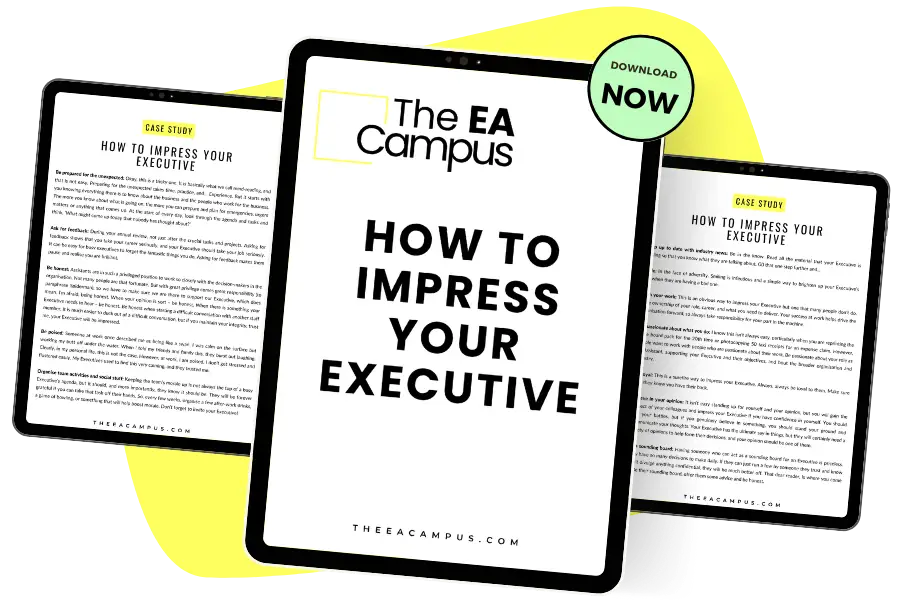
You’ll find many practical tips and tricks to equip you with the skills to manage expectations, effectively communicate, and build strong relationships with your Executive. This resource is perfect for any Assistant looking to unlock their full potential and make a measurable impact on their team.
One reason feeling underestimated happens so often in our profession is because so much of our work is invisible.
When everything runs smoothly, people rarely stop to consider why. They don’t always see the diary conflicts you prevented, the difficult conversations you managed, the risks you identified, or the countless decisions you made throughout the day. They take so much of the work we do for granted and only realise how difficult it is when it isn’t being done.
The reality is that many of the best EAs are exceptionally good at making complicated work look simple.
Feeling underestimated can also stem from some organisations still having an outdated understanding of the Executive Assistant role. While many businesses recognise the strategic value EAs bring, others continue to see the role through a purely administrative lens.
This creates situations where an experienced EA with years of business knowledge may still be treated as though they have little influence or expertise.
Another reason feeling underestimated occurs is because we often work behind the scenes supporting the success of others. When your focus is helping your Executive succeed, your own contributions can become less visible to the wider organisation.
Feeling underestimated can look different depending on your workplace and your role. But here are a few common signs :
Many EAs also describe feeling underestimated when they are given significant responsibility but very little authority. They are expected to solve problems, manage stakeholders, navigate sensitive situations, and support major initiatives, yet their expertise is not always recognised in the same way as other professionals.
For example, a project manager may be recognised for coordinating a complex piece of work, while you might be managing competing priorities, aligning stakeholders, resolving scheduling conflicts, and ensuring decisions are implemented, receives little acknowledgement because those responsibilities are seen as part of your day-to-day role. An HR professional may be viewed as a strategic advisor because they influence people decisions, while you regularly advise your Executive on organisational dynamics, team challenges, and stakeholder relationships may not receive the same recognition for their insight.
In many organisations, EAs are trusted with highly confidential information, involved in business-critical decisions, and relied upon to keep leadership teams functioning effectively. However, because much of this work happens behind the scenes, colleagues may not fully appreciate the level of judgement, business acumen, emotional intelligence, and strategic thinking required. As a result, you can find yourself carrying responsibilities comparable to other professional roles while receiving less visibility, less recognition, and fewer opportunities to demonstrate the true scope of your expertise.
Feeling underestimated affects more than career progression. It can influence how willing we are to contribute during meetings. It can affect our confidence when making decisions. It can even change how we communicate with colleagues and senior leaders.
I have spoken with many EAs who started second-guessing themselves after repeatedly feeling underestimated. They became more cautious about sharing ideas and less likely to challenge decisions, despite having valuable experience and knowledge.
The difficult part is that feeling underestimated can create a catch-22. The more we withdraw, the fewer opportunities people have to see our expertise. The fewer opportunities we have to demonstrate our value, the more feeling underestimated continues. This is why it is important to recognise the issue early and take steps to address it.
Sometimes feeling underestimated happens because people genuinely do not understand the scope of our role. They may only see a small part of what we do each day.
In those situations, increasing visibility can make a significant difference. Ask yourself:
Of course, you should look at your behaviours because they are the easiest to fix, but feeling underestimated can sometimes be a sign of a broader workplace issue.
Some organisations simply do not value the EA role as highly as others. Some leaders actively seek input from their Assistants, while others prefer to keep Assistants at arm’s length. Understanding which situation applies to you will help determine the best path forward.
If feeling underestimated is affecting your confidence or career development, there are a few practical steps you can take.
First, start tracking your impact. Keep a record of projects, achievements, cost savings, process improvements, and positive feedback. This creates evidence of your contribution and helps you communicate your value more clearly.
Second, look for opportunities to contribute visibly. This could mean participating in cross-functional projects, speaking up during meetings, or volunteering for initiatives that allow others to see your skills in action.
Third, seek regular feedback. Conversations with your Executive, colleagues, and mentors can help you understand how others perceive your role and identify areas where you may need greater visibility.
Fourth, be clear about your aspirations. Sometimes feeling underestimated happens because people assume you are happy to stay exactly where you are. If you want greater responsibility, leadership opportunities, or professional development, it is important to communicate that.
Finally, build relationships across the business. The more people understand your expertise and experience, the less likely they are to underestimate your contribution.
There are situations where feeling underestimated continues despite everything you have done to increase your visibility, demonstrate your value, and contribute at a high level.
If that sounds familiar, I want you to know that it doesn’t automatically mean you are doing something wrong. It can be incredibly disheartening to keep showing up, delivering results, and supporting others, only to feel that your expertise is still being overlooked.
Over the years, I have spoken to many EAs who eventually realised that the problem was never their capability, professionalism, or potential. The challenge was the environment they were working in.
Some organisations genuinely understand the value of Executive Assistants. They see EAs as trusted business partners, strategic advisors, and an important part of the leadership team. In those environments, your knowledge, judgement, and contribution are recognised and respected.
Other organisations are still operating with a much narrower view of the role, and that can make even the most capable EA feel frustrated and undervalued.
If you have reached the point where feeling underestimated is affecting your confidence, motivation, or career growth, it may be worth reflecting on whether the organisation is giving you the opportunity to thrive. Sometimes the most important realisation is that you do not need to work harder to prove your worth; you may simply need an environment that is better equipped to recognise it.
Finding the right environment can make an enormous difference, not only to your career development but also to how you feel about yourself and the contribution you make every day.
The important thing to remember is that feeling underestimated does not determine your value, your capability, or your future career prospects.
As EAs, we know the impact we have. We know the decisions we influence, the relationships we manage, and the outcomes we help create every day. If you are currently feeling underestimated, take some time to assess the situation, increase the visibility of your contribution, and have honest conversations about your role and aspirations.
Sometimes feeling underestimated can be addressed through better communication and greater visibility. Sometimes feeling underestimated points to a workplace that does not fully recognise the contribution of Executive Assistants. Either way, your experience, knowledge, and expertise matter. Don’t allow feeling underestimated to become the story you tell yourself about your own value.
Share this article:
Join 30,000+ Assistants receiving our carefully crafted weekly newsletter packed with valuable tips, tricks, and insights tailored specifically for Assistants like you.