
In this article, we’re going to look at negotiating salary and benefits when you have been offered a new EA role, from working out what the role is worth to making sure everything you agree to ends up in your contract.
Why does it matter? Because the offer you accept sets the starting point for much of what follows, including your future pay rises, your bonus, and how much flexibility you have in your week.
As EAs, we negotiate all the time. We negotiate with venues and suppliers; we negotiate diary time between Executives who all believe their meeting is the priority, and we are usually very good at it. But when we are negotiating for ourselves, it feels completely different, and a lot of us accept the first offer just to get it over with.
Here’s what we’ll cover:
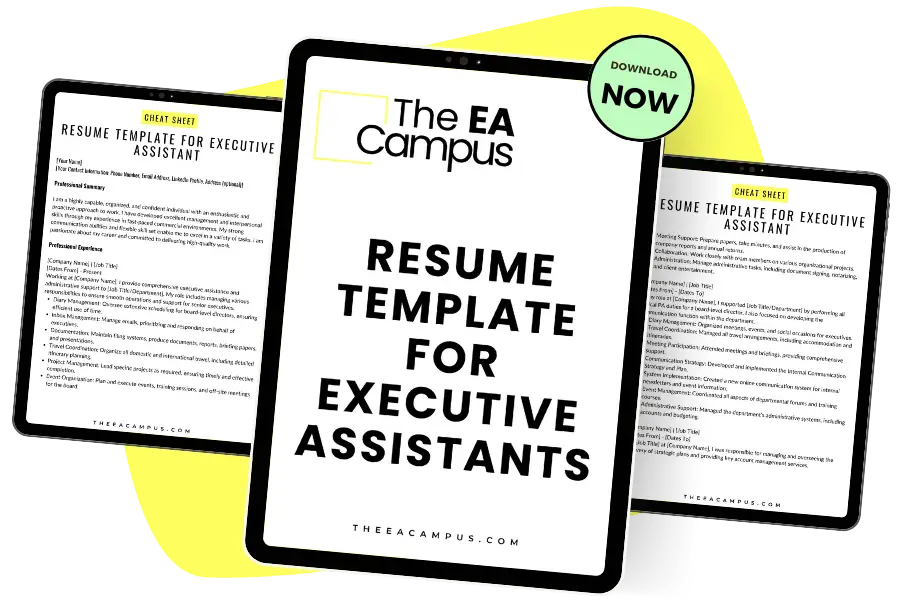
This template covers everything you need to get your resume in front of the right recruiters and employers. It is a free downloadable PDF; you can adapt it to create the perfect resume for your career history.
There are some very understandable reasons we skip negotiating salary and benefits and say yes straight away. First, we don’t want to start badly with a new Executive. The job is a relationship, and it can feel risky to open that relationship with a conversation about money before you have even had your first one-to-one.
Then there is the assumption that the offer is fixed, that the organization has set a number and asking for more will make you look ungrateful, or might even make them withdraw it. In reality, most employers expect some negotiation, and an offer being pulled because a candidate asked a polite, well-reasoned question is far less common than we tend to fear. In reality, most employers expect some negotiation. An XpertHR survey of 324 US employers found that 89% were open to negotiating salary after making a job offer, for some or all of their roles. So an offer being pulled because a candidate asked a polite, well-reasoned question is likely to be far less common than we tend to fear.
And sometimes we simply want out. I’ve been there myself. I was in a role I wasn’t enjoying very much; I had been applying for a few months, and when an offer finally came through, it was for exactly the same salary I was already on. No pay rise at all. What it did have was a bonus structure, which my current role didn’t, and I was so ready to move that I took it without really questioning it (more on how that bonus turned out later).
None of these reasons mean you shouldn’t ask. They just mean it helps to go in prepared, so that negotiating salary and benefits feels like a normal professional conversation and much less like a confrontation.
When we think about negotiating salary and benefits, most of us only think about the first half of that phrase. But base salary is one item in a much bigger package, and sometimes the other items are easier for an organization to say yes to.
Here is what is usually up for discussion:
It is also worth noting that some of these will matter far more to you than others. Before the conversation, decide which two or three you care about most, so you aren’t trying to negotiate everything at once.

So where do you start? With research, and this is the step a lot of us skip. It is very hard to ask for more if you don’t know what more looks like.
There are a few good places to look. Salary surveys from recruitment agencies that specialize in EA roles will usually break figures down by location and seniority, and recruiters are often happy to tell you what similar roles are paying if you ask them directly. We have also talked about this in depth on the podcast, in The Real State of EA Salaries and EA Salary Transparency, and both are worth a listen before you go into any offer conversation.
The most important thing when negotiating salary and benefits is to price the scope of the role, rather than the job title. Two roles both advertised as “Executive Assistant” can be completely different jobs. Before you settle on a number, look closely at the job description and at what you learned in the interviews:
If the role includes work that would normally belong to a more senior position, that is a strong reason for negotiating salary and benefits upwards, and you can say so.
Once you know what the role is worth, you need to show why you are worth it. This is where the value you create for an Executive matters far more than the list of tasks you carry out.
A hiring manager already knows you can manage a diary. What they want to know is what changes for their Executive when you arrive. So look back at your current role and pull out the outcomes:
Then connect those outcomes to what you learned about this new Executive during the interview process. If they told you they spend their weekends catching up on email, that is a problem you can solve, and it makes for a much stronger case than “I would like a higher salary.”
Write these examples down before the call. When nerves kick in, it is really helpful to have them in front of you, and it makes negotiating salary and benefits feel a lot less like improvising.
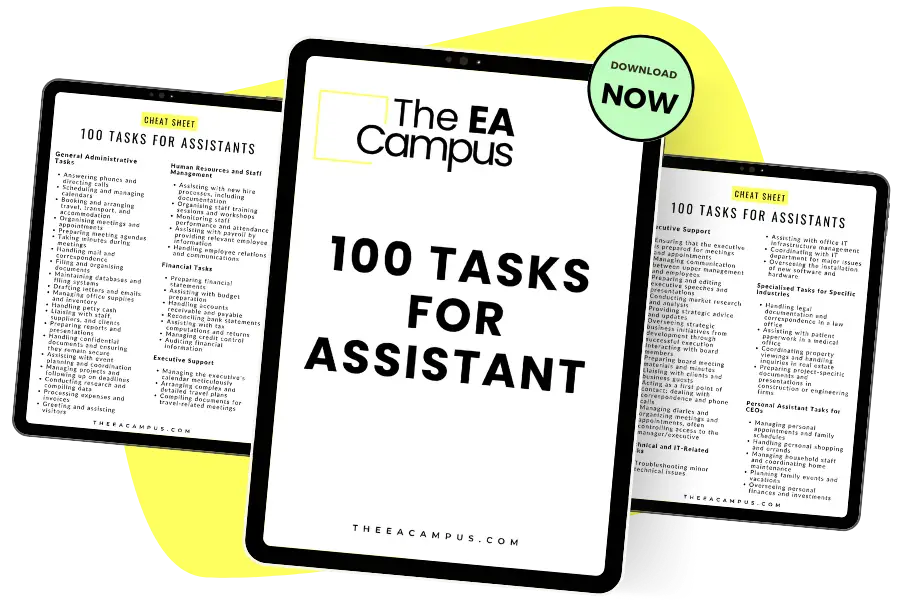
This List of Tasks for Executive Assistants Download helps you recall and record every task you handle, supports you in writing polished CVs and precise job descriptions, and recognises additional responsibilities you can undertake.
So when do you actually raise it? The best time for negotiating salary and benefits is after you have received the offer and before you accept it. At that point they have decided they want you, and you haven’t yet agreed to anything.
You may be speaking to a recruiter, someone in HR, or in some cases the Executive themselves. If there is a recruiter involved, use them, because negotiating salary and benefits is part of what they do, and it keeps some of the awkwardness away from your future working relationship with your Exec.
I’d also suggest asking for a little time. It is completely reasonable to say thank you, tell them you are excited, and ask whether you can come back to them in a day or two once you have looked over the full details.
When you do go back, lead with your enthusiasm, then make your request clearly and give your reasons. If being direct about what you want doesn’t come naturally, our post on mastering assertiveness is a good one to read first.
Instead of saying, “I was hoping for a bit more, is there any flexibility?” try, “Thank you so much, I’m really excited about this role and about working with Sarah. Based on the scope of the role, supporting the CEO and the board, running the leadership offsite and managing travel across three regions, and on the salary research I’ve done, I was hoping for a base salary closer to [figure]. Is that something you can look at?”
Can you see the difference? The first version makes it very easy to say no. The second shows you understand the job and gives them a clear reason to go back and ask for the budget.
What about the question that comes up early on, “What are your salary expectations?” If you are asked before an offer is made, it is fine to give a range based on your research, as long as the bottom of that range is a figure you would be happy with. You can also turn it around and ask what budget they have set for the role.
Phone or video is usually better than email for the first conversation, because it is easier to read the response and have a proper back-and-forth. But always follow it up in writing, and I’ll come back to why that matters so much.
Sometimes the answer on salary really is no. That doesn’t mean you have to stop negotiating salary and benefits altogether.
You have options here, and only you know which one is right for you:
It helps to know your walk-away figure before you start negotiating salary and benefits, because it is much harder to work out in the moment when you are already picturing yourself in the new job.
This is the part I wish someone had told me. Remember that bonus structure? I took the job on the strength of it, but I never got the details in writing. When the bonus was paid it wasn’t anywhere near what I had expected, and I ended up earning pretty much what I had in my previous role. Looking back, not getting it in writing was an error, and it is one I’d really like you to avoid.
Whatever you agree when negotiating salary and benefits, check that it appears in your offer letter or contract before you sign. That includes:
If something was agreed on a call, send a short email afterwards confirming what you discussed and ask for it to be added to the contract. It might feel a little formal, but a good employer won’t mind at all, and it protects both of you.
Negotiating salary and benefits as an EA can feel uncomfortable, especially at the very start of a relationship with a new Executive. But everything in this post is something you already do for your Exec: you research, you build a case, you ask clearly and you get the outcome confirmed in writing. This time, your new Executive gets to see exactly how well you do it.
If you want practical support with this, from refining your CV to preparing structured interview examples and strengthening your LinkedIn profile, we have a free resource that walks you through it step by step. You can access the Assistant Job Search Accelerator here.
Share this article:
Join 30,000+ Assistants receiving our carefully crafted weekly newsletter packed with valuable tips, tricks, and insights tailored specifically for Assistants like you.