
As Executive Assistants, we ask a lot of questions every single day. Whether it’s checking in with our Executive, following up with a colleague, or trying to pin down a supplier, so much of our role depends on the information we gather. What we sometimes forget is that the quality of our questions makes all the difference. When we focus on asking good questions, we gain clarity, build trust, reduce confusion, and demonstrate that we’re thinking one step ahead.
When I first started as an EA, I was nervous about speaking up. I worried about bothering my Executive with too many questions, or that I should already know the answer. Over time, I realised that asking good questions in the EA role is one of the most valuable skills we can develop. Not only does it make us more effective, it also shows our Executives that we’re engaged, proactive, and ready to support them at a higher level.
That’s why in this article, we’re going to explore how asking good questions in the EA role can strengthen your partnership with your Executive. I’ve pulled together 100 practical questions you can use in different situations. These aren’t filler questions or things you already know. They’re designed to help you get context, stay in the loop, and show up as the collaborative, strategic partner your Executive needs.
The questions we ask have the power to shape how effectively we work with our Executives, and how much impact we can make every day.
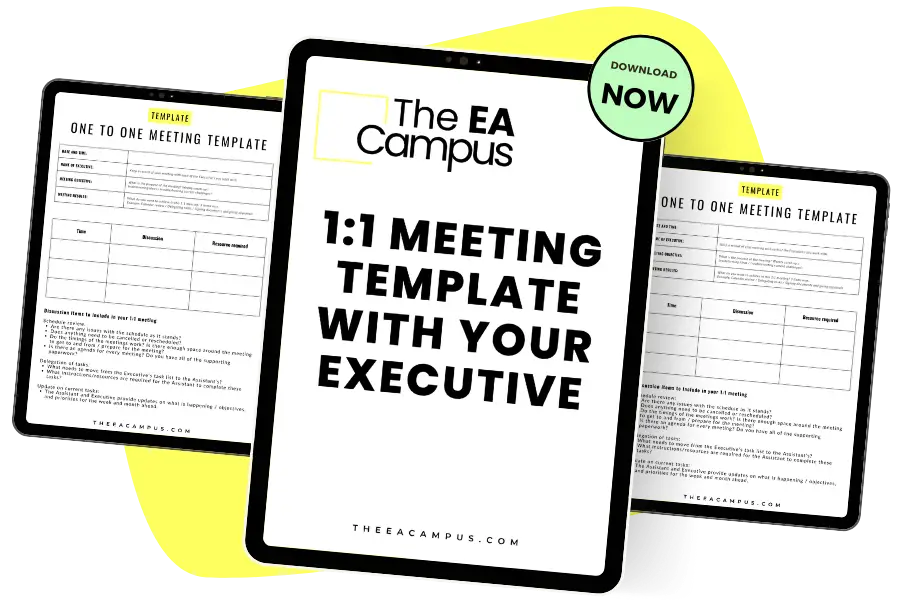
The 1:1 Meeting Template for Executives and Assistants gives you the steps to ensure that when you have a one-to-one meeting with your Executive, you get through all the work you need to cover and maximise your time together.
When we talk about asking good questions in the EA role, it’s more than a valuable skill. It helps us move from simply completing tasks to being recognized as collaborative partners. Asking good questions allows us to cut through noise, stay aligned with our Executive, and make sure the work we’re doing has real impact.
Align Priorities
Priorities can shift quickly, and it’s easy for focus to be lost in the day-to-day. By asking good questions, such as “What’s the top outcome you want from this project?” or “How does this fit into our bigger goals?” we ensure that our time and energy are directed where they matter most. This is how we support our Executive strategically, not just reactively. Asking good questions in the EA role keeps both of us on track.
Strengthen Trust
Trust grows when our Executives know we’ve understood what’s being asked of us. Clarifying expectations with good questions shows that we’re listening, engaged, and thinking things through. Simple prompts such as “What’s the timeline?” or “What’s the outcome you’re looking for?” demonstrate that we’re on top of the details. Over time, asking good questions in the EA role creates confidence and reassures our Executive that nothing will slip through the cracks.
Increase Efficiency
We’ve all wasted time fixing something that could have been avoided with one extra question. Asking good questions removes ambiguity, clears up assumptions, and ensures we’re working efficiently. For example, “Who else should be involved in this?” or “Is there a preferred format for the final output?” might sound simple, but they prevent hours of rework. Asking good questions in the EA role is one of the most effective ways to protect our own time and our Executive’s.
Anticipate Needs
One of the most valuable parts of our job is staying two steps ahead. That’s possible when we’re asking good questions that reveal what’s coming. Questions like, “What projects are on the horizon that we should prepare for?” or “What potential obstacles could get in the way?” help us anticipate, not scramble. This is where we can really shine as strategic partners. When we’re asking good questions in the EA role, we’re not only responding to what’s in front of us, we’re actively shaping what’s next.
In short, asking good questions is at the heart of effective collaboration. It helps us align, build trust, work smarter, and look ahead. This small habit has a huge impact on how we work with our Executives and how they see us as essential to their success.
We all know that asking good questions in the EA role can make or break how effectively we work with our Executives. A long list of 100 questions might feel like a lot if it’s just presented in one block. To keep things practical, I’ve grouped the questions into everyday scenarios you’ll recognise from your role. Each category has 10 focused prompts you can use straight away. Think of it as a toolkit: whenever you need clarity, context, or want to show initiative, you’ll have the right words ready. This list is about asking good questions that help us collaborate, stay aligned, and add real value.
Our Executives are often pulled in many directions, and it’s easy for tasks to pile up without a clear sense of what matters most. By asking good questions in the EA role, we keep the focus on the work that delivers the biggest impact. 10 questions to ask:
How does this fit into our current goals?
Which of these tasks is most urgent right now?
What does success look like for this?
If we could only deliver one part of this, what would it be?
Is this something you want to handle directly, or can I take ownership?
How does this compare in priority to other projects we’re working on?
What’s the main risk if this slips?
Do we need to adjust any deadlines to reflect shifting priorities?
Who else is depending on this task being completed?
What’s the long-term value of doing this well?

A well-managed calendar is one of the most valuable things we can give our Executives. By asking good questions, we ensure their schedule aligns with their priorities, energy levels, and focus. This is where asking good questions in the EA role really shows its value. 10 questions to ask:
When do you feel most productive, and can we schedule priority work during that time?
Are there meetings that consistently run over and should we adjust the timing?
Which regular meetings are essential and which could be shortened or delegated?
Do you need buffer time between back-to-back meetings?
Are there specific types of work you prefer to do in the morning or afternoon?
Who do you need to see more often, and who could we scale back with?
Are there days or times of the week you’d like to protect for deep work?
Should we set aside regular time for team catch-ups or one-to-ones?
Which upcoming commitments are negotiable if priorities shift?
How can I make your calendar feel less reactive and more strategic?
The right preparation can turn a meeting from a time drain into something productive. By asking good questions in the EA role, we help our Executives go in clear on what they want to achieve and who they need in the room. 10 questions to ask:
What’s the key takeaway you want from this meeting?
Who absolutely needs to be there, and who can be updated afterwards?
Is there background information you’d like me to prepare in advance?
Are there questions you want to ask the group or an individual?
Do you want to set any specific objectives for this meeting?
What would make this meeting a success for you?
Should I prepare a summary or a briefing note beforehand?
Is there anyone you’d like me to connect with ahead of time to align expectations?
Are there decisions that must be made in this meeting?
How much time do you want to allocate, and is that realistic?
Meetings are only valuable if the outcomes are clear and acted on. By asking good questions, we make sure next steps are agreed, responsibilities are clear, and nothing gets lost. This is one of the areas where asking good questions in the EA role makes an immediate difference. 10 questions to ask:
Who owns the next step, and by when?
Are there any actions I should follow up on today?
Should I capture and share a summary with the attendees?
Are there stakeholders who need an update but weren’t in the meeting?
Which tasks need to move straight into the calendar?
Do you want me to track progress on any of the action items?
What decisions came out of this meeting that I should note?
Are there any risks we identified that I should flag or monitor?
Should we schedule a follow-up meeting, or will updates happen another way?
What would you like me to prioritise from today’s discussion?
Projects can easily stall without clear ownership and alignment. By asking good questions in the EA role, we make sure our Executives have the right support, and we position ourselves as a reliable partner throughout the process. 10 questions to ask:
What does success look like for this project?
Who are the key stakeholders, and how should I communicate with them?
Are there milestones I should track and remind you of?
Do you want regular updates, and in what format?
Are there potential risks or challenges we should prepare for?
What budget or resources are attached to this project?
Who makes the final decisions if issues come up?
How visible should this project be across the team or organisation?
Are there quick wins we should focus on first?
What would you like my role to be as this project develops?
Our Executives are constantly balancing day-to-day demands with long-term goals. By asking good questions, we ensure that the work we’re supporting ties back to the broader picture. This is where asking good questions in the EA role positions us as strategic partners. 10 questions to ask:
Which of our goals should I keep top of mind this quarter?
How does this initiative connect to our overall strategy?
Are there priorities from leadership that I should be aware of?
What external factors could impact our plans?
Which metrics are most important for us to focus on?
How will this decision influence the team or organisation long-term?
Are there trade-offs we need to be mindful of with this work?
Which projects are most closely tied to your vision for the year?
Do we need to adjust focus as circumstances change?
How can I make sure my work supports your strategic priorities?
A strong partnership with our Executive isn’t built on tasks alone. By asking good questions, we show we’re invested in their success and well-being. This is one of the most human parts of asking good questions in the EA role, and it helps create trust and mutual respect. 10 questions to ask:
Where can I take more ownership to lighten your load?
Are there areas where you’d like me to be more proactive?
How do you prefer to receive updates from me?
Is there anything I could do differently to make your day easier?
What communication style works best for you?
Are there priorities you don’t get enough time for that I could help protect?
How often would you like us to review your goals together?
Are there aspects of your role you’d like me to learn more about?
What can I do to support your work-life balance?
Is there feedback you’d like to give me on how I support you?
So much of our role involves being the bridge between our Executive and others. By asking good questions, we make collaboration smoother, avoid misunderstandings, and ensure that information flows smoothly. When we focus on asking good questions in the EA role, we help strengthen relationships across the organisation. 10 questions to ask:
What’s the best way to keep you updated on this?
Who else needs to be involved in this conversation?
Is there a preferred process or format for sharing updates?
Are there potential conflicts I should be aware of?
How often would you like me to check in on progress?
Who should I go to for quick decisions on this project?
Are there stakeholders I should prioritise communicating with?
What background would be most useful for me to share with you?
How do you prefer feedback to be given and received?
Is there anything I can do to make collaboration easier for you?
Our growth as Executive Assistants directly impacts how well we can support our Executives. By asking good questions in the EA role, we show we’re committed to learning, improving, and building a long-term partnership. 10 questions to ask:
What skills would you like me to strengthen to support you better?
Are there areas where I could take on more responsibility?
Do you see opportunities for me to grow within the organisation?
What do you value most about how I support you?
Is there anything I could adjust in the way I work with you?
Are there training or development opportunities you’d recommend?
How can I help you get the best out of me?
Are there ways I could communicate more effectively with you?
What would you like me to focus on improving this quarter?
How often would you like us to have feedback conversations?
We all know the difference between blurting out a quick question and asking one with purpose. A few small tweaks can help make sure our questions land well:
Don’t apologise or diminish the question. How many times have you started with “Sorry, this might be a silly question, but…” or “I just wanted to check…”? These phrases might feel polite, but they quietly undermine your confidence and signal to others that your question is less valuable. The reality is, as Executive Assistants, our questions matter. They help us protect our Executive’s time, avoid mistakes, and keep everything running smoothly. So instead of softening your voice or apologising, state your question clearly. You’ll be taken more seriously, and you’ll show that you believe in the importance of what you’re asking.
Keep questions open-ended where possible. An open-ended question encourages your Executive to share more than a yes or no answer. It gives you insight into their thinking and creates space for useful context.
Be concise. Your Executive doesn’t need a long explanation leading up to the question. They need the question itself, asked clearly and directly. This shows respect for their time and makes it easier for them to respond.
Use follow-up questions to deepen understanding. Sometimes the first answer only scratches the surface. A well-placed follow-up – “Can you tell me more about the priority behind this?” – can give you a clearer picture and help you anticipate needs.
Asking good questions in the EA role is one of the simplest ways we can shift from task-based support to genuine collaboration. When we ask with confidence and clarity, we help our Executives focus on what matters, and we position ourselves as strategic partners.
These 100 questions aren’t a checklist to work through in one sitting. They’re a toolkit you can draw from whenever you need clarity, context, or a chance to show initiative. The more we practice asking good questions, the stronger our partnerships become, and the more impact we have every day.
If you’re ready to take your role to the next level and further enhance your ability to build strong, impactful relationships with your Executive, the Strategic Business Partner Online Course is for you. This comprehensive program is designed to empower Assistants to become trusted advisors, develop strategic thinking skills, and make a measurable impact on their organizations.
Share this article:
Join 30,000+ Assistants receiving our carefully crafted weekly newsletter packed with valuable tips, tricks, and insights tailored specifically for Assistants like you.