
In a recent Virtual Summit, Hallie Warner, an amazing speaker and expert on career development for Assistant and Chief of Staff roles, emphasized the importance of building a personal brand for Assistants and other Administrative professionals. When you take ownership of your personal development, you naturally increase visibility and influence in the workplace.
As Assistants, we know that visibility and influence don’t just happen – we have to be intentional about building our reputation and making sure our contributions are recognized. With the business world evolving rapidly, we need to stay ahead by embracing technology and the opportunities it brings to showcase our expertise. And let’s be honest, we already do so much behind the scenes—why not make sure our work is seen and valued? In this Guide for Assistants to Increase Visibility and Influence, we’ll explore practical strategies to build our personal brand in a way that feels authentic, manageable, and actually useful. Building a personal brand helps Assistants increase visibility and influence across their organization.
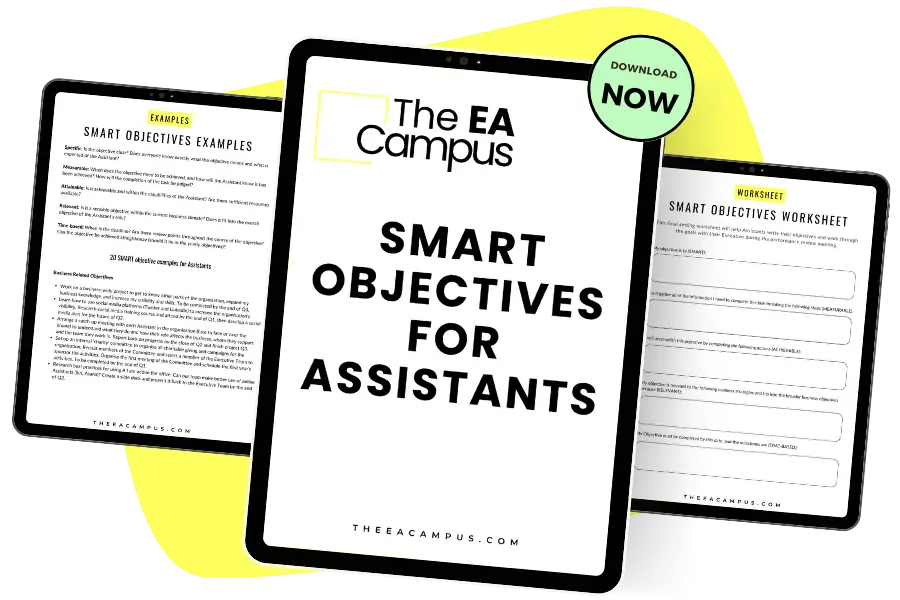
This exclusive bundle of resources is designed for The Importance of Setting and Achieving Goals for Executive Assistants – it includes a range of useful templates, including examples of SMART objectives for Executive Assistants, goal-setting worksheets, conversation templates, and more.
First things first, let’s talk about what makes you, well, you. Your personal brand is all about leveraging your unique strengths and making them work for you. Ask yourself:
Taking stock of these things will help you define the value you bring and ensure that others see it too.
What we read, listen to, and watch impacts how we think and show up in professional settings. If we want to be seen as strategic partners, we need to consume content that keeps us informed and helps us grow.
Instead of just scrolling mindlessly, be selective:
We don’t need to read everything – we just need to read the right things. Make it a habit to dedicate even just a few minutes a day to staying informed.

Now that you’re learning and staying informed, let’s put that knowledge to work. Building visibility isn’t just about what you know, it’s about who knows you know it.
Here’s how to make that happen:
If we want to elevate our careers, we need to be around people who inspire us and challenge us to grow. That means:
Surrounding yourself with knowledgeable people makes all the difference. When you’re in the right circles, you’re exposed to new opportunities, insights, and collaborations that you wouldn’t have access to otherwise. Surrounding yourself with ambitious peers is a surefire way to increase visibility and influence by association.
It’s not enough to gather knowledge – we have to put it into action.
As Assistants, we’re in a unique position to influence decisions and drive change within our organizations. But we have to be intentional about sharing our insights and ideas.
The key to building your personal brand is showing up consistently. Make a plan to:
Visibility and influence don’t happen overnight, but with consistent effort, they will happen. We’re already doing the hard work—now let’s make sure it gets noticed.
And if you’re looking for more guidance on this, we dive even deeper in our Strategic Business Partner Online Course. Because when we invest in ourselves, we create opportunities not just for us, but for the entire profession. Consistency is key when you’re working to increase visibility and influence in both digital and in-person environments.
Tracking the progress of a decision, especially one that you made correctly, really helps build confidence for future decision-making. What was the impact of the decision? How did people react?
Like so many things, the more experience you have, the easier it will be to make decisions and have confidence that your choices are correct and in line with the growth of the business. So with this one, the more decisions you make, the better and easier it gets.
As Assistants, making decisions is something that can come with a lot of pressure and insecurity. But by learning to ground ourselves in our values and, most importantly, not to be afraid of making mistakes, we can become better decision-makers and use this skill for future goals.
Taking the time to learn these valuable techniques could drastically improve our decision-making skills and give us more direction when considering challenging tasks in the future. If you’re eager to equip yourself with the best tools available to maintain strong critical thinking, why not enroll in the Assistant Mindset Online Course? It’s full of guidance to help you navigate the Assistant role with increased confidence and clarity.
Share this article:
Join 30,000+ Assistants receiving our carefully crafted weekly newsletter packed with valuable tips, tricks, and insights tailored specifically for Assistants like you.