
As Executive Assistants, we know that the one-to-one meeting with our Executive is a cornerstone of effective collaboration. These meetings aren’t just another item on the calendar—they’re our opportunity to align priorities, tackle challenges, and make sure everything runs smoothly. Managing the one-to-one meeting is essential for:
Alignment
The one-to-one meeting gives you the space to ensure that you and your Executive are fully aligned on goals, tasks, and priorities so you both know exactly what’s happening and why it matters.
Efficiency
Managing the one-to-one meeting effectively ensures that miscommunications are minimized and expectations are crystal clear. This dedicated time helps both you and your Executive address potential issues early, keeping everything running smoothly and avoiding unnecessary back-and-forth later.
Strategic Planning
Managing the one-to-one meeting allows you to create a dedicated space for proactive discussions about future objectives. This is where you and your Executive can think beyond the immediate tasks, focus on long-term goals, and align your efforts to ensure you’re steering in the right direction. It’s a chance to explore opportunities, address potential challenges, and set a clear path forward with your Executive.
Time Management
Managing the one-to-one meeting is a game changer when it comes to saving time. By dedicating this space for alignment and updates, you reduce the need for constant follow-ups and minimize the stress of last-minute schedule changes. This approach creates a rhythm in your week that keeps everything—and everyone—on track.
Improved Outcomes
Managing the one-to-one meeting ensures clear direction for task completion. When we dedicate time to align on expectations and next steps, we eliminate ambiguity and empower our Executives to focus on their priorities. This clarity not only keeps things moving smoothly but also showcases our proactive approach to supporting their success.
So, if we know how vital one-to-one meetings are, why do so many Assistants struggle to make them happen, or when they do, fail to get the results they need?
This is a question we’ve explored extensively at The EA Campus. It’s a recurring topic of discussion within our community because it’s a challenge many of us face, and we know how frustrating it can be. Whether it’s meetings being deprioritized, shortened, or canceled altogether, the struggle is real. Managing the one-to-one meeting is one of the most powerful ways an executive assistant can drive clarity, alignment, and strategic focus.
We’ve found that these hurdles often stem from a mix of external factors, like an Executive’s packed schedule, and internal factors, such as our own tendency to put others’ priorities before our own. But don’t worry; you’re not alone in this when managing the one-to-one meeting effectively, and there are practical ways to overcome these challenges.
Let’s be honest: keeping these meetings a priority can be tricky, even when we know how crucial they are. Whether it’s a packed schedule, shifting priorities, or the challenge of communicating their importance, these hurdles can make it feel like an uphill battle when managing the one-to-one meeting effectively. Over time, we’ve heard countless Assistants share their experiences with this exact issue, and that’s why it’s so important to address it head-on. Here are two common challenges we face:
Executives undervaluing the meeting: Sometimes, when managing the one-to-one meeting, our Executives don’t see how valuable a regular check-in can be.
We deprioritize our own meetings: It’s easy to let other meetings take precedence, but our one-to-one time is just as important—if not more so.
For the first group, communicating the benefits of these meetings is essential. Executives might not realise the value of a structured, regular check-in unless it’s presented to them. For the second group, it’s crucial to understand that their time with the Executive is as valuable as any other meeting, if not more.
So, when managing the one-to-one meeting how can we ensure the meeting is successful when it happens and that it doesn’t get knocked off the agenda? In this guide, we will share strategies you can put in place to make it the highlight of your week and, more importantly, your Executive. The goal is to have your Executive rely on this meeting to structure their week and prioritize their tasks. When they see the value it brings, it’ll naturally become a non-negotiable part of their schedule. Let’s start with the structure. If you want to elevate your role and improve communication, mastering the art of managing the one-to-one meeting is a must.
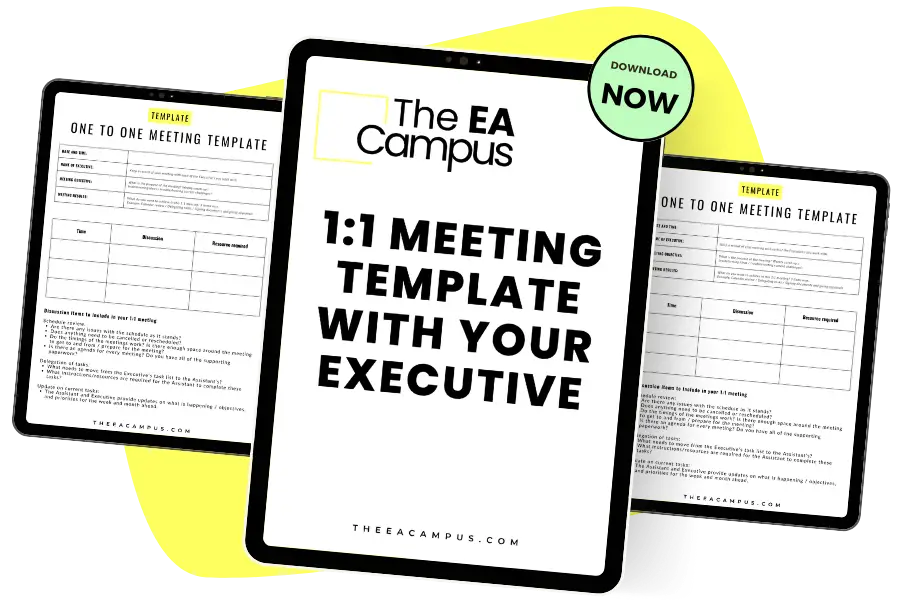
The 1:1 Meeting Template for Executives and Assistants gives you the steps to ensure that when you have a one-to-one meeting with your Executive, you get through all the work you need to cover and maximise your time together.
We all know that a well-structured meeting is a productive one; this is particularly true when managing the one-to-one meeting. It’s the difference between a chaotic catch-up and a session that sets the tone for the week ahead. When you approach your one-to-one meetings with a clear framework, you ensure that every minute counts. Here’s a simple framework that works:
Start by creating a shared agenda using collaboration tools like shared documents or apps. This allows both you and your Executive to add discussion points ahead of time, ensuring nothing important is overlooked. Taking this step when managing the one-to-one meeting not only keeps the meeting organized but also signals to your Executive that their input is valued and essential. Managing the one-to-one meeting effectively ensures your executive stays focused, supported, and aligned with their priorities.
Example Agenda:
Review key updates from the past week.
Discuss schedule adjustments and upcoming events.
Address any immediate concerns or challenges.
Align on priorities and deadlines for the week ahead.
Strategic planning for long-term goals.
Wrap up with a summary of next steps and action items.
Come prepared for the meeting (every single time). Bring relevant data, updates, and questions so you’re ready to make the most of your time together. For example, compile a list of outstanding tasks, highlight key achievements from the week, and note any areas where you need clarification or additional support. This level of preparation not only shows your professionalism but also ensures that the meeting remains focused and productive. This is super important when managing the one-to-one meeting.
The actual meeting is where all your preparation comes together. This is your moment to connect, clarify, and collaborate with your Executive. Think of it as a focused conversation designed to tackle the most important issues and set the tone for the days ahead. By following a clear structure and staying on track, you can ensure the meeting remains productive and leaves both you and your Executive feeling aligned and ready to move forward.
Agenda Review:
Start by reviewing the agenda and confirming priorities. Remember this is your meeting to lead, so begin by walking through each item on the agenda to ensure it aligns with your Executive’s current priorities. Address any immediate adjustments or additions they may have to make the meeting as relevant and impactful as possible. This step sets the tone for a focused and efficient discussion.
Schedule Updates
Take the time to walk through any changes to your Executive’s calendar, including rescheduled meetings, added commitments, or canceled appointments. Use this as an opportunity to flag potential conflicts, ensure preparation for upcoming events, and identify areas where you can step in to assist. By staying on top of these updates, you’ll not only streamline their schedule but also showcase your ability to anticipate and address their needs. Don’t spend the entire meeting talking about the schedule but do use this opportunity to smooth out any issues you know will come up without your Execuitve’s input.
Task Delegation
Identify tasks that can be shifted from your Executive’s plate to yours or other team members. Start by discussing their current workload and asking which tasks are consuming the most time or causing delays. Once identified, clarify the scope of the delegated tasks, expected outcomes, and deadlines. Make sure you have the necessary resources and information to handle these responsibilities effectively. This not only alleviates pressure on your Executive but also demonstrates your ability to take initiative and manage projects proactively.
Status Updates
Use the PPP method (“Progress, Plans, Problems”) to keep updates concise and focused. Start by summarizing the progress on key tasks or projects, ensuring your Executive is aware of what’s been accomplished. Then, outline your plans for the week ahead, highlighting priorities and upcoming deadlines. Finally, address any problems or roadblocks that require their input or approval. This structure keeps the conversation organized and ensures that critical information is communicated effectively.
Strategic Discussions
Use this time to focus on the big picture and align on future goals. Dive into long-term strategies, discuss upcoming projects, and explore opportunities to improve workflows or tackle potential challenges. Encourage your Executive to share their vision and priorities, while also contributing your perspective on how to achieve those goals effectively. This collaborative approach not only strengthens your partnership but also ensures you’re both working toward shared objectives.
Wrap-Up
Summarize the action items and confirm the responsibilities with clarity. Take a moment to reiterate the key decisions made during the meeting and ensure both you and your Executive are aligned on the next steps. This is also an opportunity to address any lingering questions or uncertainties before the meeting ends. Make sure you conclude with a positive note, thanking your Executive for their time and reaffirming the value of the meeting.
Your work doesn’t end when the meeting does. In fact, this is where the follow-through begins. The way you handle the post-meeting tasks is just as important as the meeting itself. By promptly summarizing decisions, tracking progress, and setting up for the next meeting, you’ll ensure that everything discussed translates into meaningful action. Let’s dive into what you need to do to make the most of the momentum you’ve built when managing the one-to-one meeting.
Follow-Up
Send a detailed summary of what was decided, including key points discussed, agreed deadlines, and specific action items for both you and your Executive. Ensure the summary is concise yet comprehensive, focusing on clarity to avoid misunderstandings. Sharing this promptly, preferably within an hour or two, reinforces accountability and sets the tone for executing the plans effectively.
Follow-Up Email Template:
Subject: Follow-Up from Today’s One-to-One Meeting
Hi [Executive’s Name],
Thank you for taking the time to meet today. Here’s a summary of what we discussed and the agreed next steps:
Key Points Discussed:
[Briefly outline the main discussion topics.]
Action Items:
[Task or decision 1] – [Assigned to person] – [Deadline]
[Task or decision 2] – [Assigned to person] – [Deadline]
[Task or decision 3] – [Assigned to person] – [Deadline]
Other Notes:
[Any additional information or follow-ups.]
Let me know if I missed anything or if there’s anything else you’d like me to prioritize. Looking forward to our next meeting!
Best regards,
[Your Name]
Track Progress
Use your preferred task management tool to keep everything on track and prepare for the next meeting. Regularly review action items to ensure tasks are progressing as planned, and flag any issues that might require your Executive’s input. Document progress clearly so both you and your Executive can enter the next meeting fully prepared. This step not only keeps momentum but also reinforces your role as an organized and proactive partner.
Following a structure will ensure that you are prepared and ready to go for every one-to-one meeting you have with your Executive. Remember, you are leading this meeting and managing it from start to finish. The structure may seem detailed, especially during weeks when you both are so busy that time feels scarce. Whether you have just a short moment to squeeze everything in or your full half-hour or hour with plenty to cover, use the structure to prioritize what will resonate most in the moment.
Also, consider the place your Executive is in—both mentally and in terms of their workload. Are they in a strategic mindset where big-picture planning will thrive, or would tackling lighter, more immediate tasks better suit their energy level? Your ability to read the room and adjust accordingly is where you truly shine. This is your time to lead and impress, showcasing your exceptional skills and making the meeting an indispensable part of your Executive’s routine.
The timing of the one-to-one meeting can vary based on the Executive’s schedule and preferences. However, it’s generally a good idea to schedule it at either the start or end of the week. A Monday meeting sets the tone for the days ahead, offering an opportunity to plan, align priorities, and address potential roadblocks. Alternatively, an end-of-week meeting is perfect for reviewing progress, reflecting on achievements, and preparing for the following week.
In addition to these sessions, consider scheduling a short mid-week catch-up. This provides a chance to handle any urgent matters, recalibrate priorities, and ensure everything stays on track. The frequency of these meetings should be consistent—whether weekly or bi-weekly—to establish a routine that both you and your Executive can rely on. Flexibility is key, but maintaining regularity reinforces the importance of these sessions and ensures they remain a cornerstone of your collaborative workflow. One of the best ways to demonstrate your leadership is by consistently managing the one-to-one meeting with confidence and purpose.

Now that we’ve laid out the structure for successful one-to-one meetings with your Executive, let’s explore how to take them to the next level with actionable best practices. These tips are designed to help you refine your approach, maintain consistency, and make your meetings an indispensable tool for collaboration and alignment. Whether you’re trying to minimize distractions, stay assertive, or focus on strategic discussions, these practices will keep your meetings impactful and productive. And trust me, you’ll notice the difference in every aspect of your role when you get these one-to-one meetings right.
If you are struggling to get your Executive to see the importance of the meeting try changing the name of the meeting from ‘catch-up’ or ‘one-to-one’. Calling it a “Strategic Alignment” or “Business Update” meeting can make it feel more essential and signal its importance to your Executive and the wider Organization. A clear and intentional name reframes the meeting as a valuable business tool rather than a casual check-in. This simple shift in language can set a professional tone, reinforce the meeting’s purpose, and help it stand out among other commitments in your Executive’s calendar. By emphasizing strategy or business outcomes in the name, you’re making it clear that this is time well spent. It isn’t for your benefit; it is for your Executive and the forward direction of your work.
Striking the right balance between personal and professional talk is key to a successful one-to-one meeting. While it’s essential to keep discussions high-level and focused on critical priorities, a bit of personal chat can be an excellent opportunity to build rapport. This balance often depends on timing and the current state of the business. During particularly busy seasons, it might be best to keep personal conversation to a minimum and focus entirely on pressing issues. However, introducing a moment of levity or a lighter tone can also serve as a breath of fresh air when your Executive is under significant pressure.
Judging the mood is vital.
If your Executive is in a reflective, deep-thinking mindset, use the opportunity to discuss strategic priorities. On the other hand, if they seem overwhelmed, consider easing into the meeting with lighter topics or more manageable tasks to help them refocus. Ultimately, your ability to read the room and adapt ensures the meeting remains productive while also strengthening your professional relationship. Start by identifying the critical issues or decisions that require immediate attention and guide the conversation to ensure these take precedence. By keeping the meeting business-oriented, you can maximize its productivity and reinforce the purpose of the one-to-one as a strategic tool. This doesn’t mean you can’t have a personable touch, but it’s essential to balance rapport-building with achieving clear objectives. Ultimately, focusing on business demonstrates your commitment to supporting your Executive in the most impactful way.
This is your meeting—own it! You set the tone, guide the flow, and ensure the discussion stays on track. While collaboration is key, remember that this time is as much yours as it is your Executive’s. Drive the agenda with confidence and make space for your voice, especially when presenting updates, highlighting challenges, or suggesting solutions. Assertiveness also means gently steering the conversation back on course if it veers off-topic, ensuring that every minute is purposeful. This proactive leadership not only showcases your skills but also solidifies the value of these meetings in your Executive’s mind.
Find a quiet space where you can both focus without interruptions. This is especially important when working from home or remotely, where potential distractions can include everything from household noise to unexpected virtual meeting requests. Ensure you have a designated, distraction-free environment, and encourage your Executive to do the same. Whether it’s silencing notifications or setting a “do not disturb” mode during the meeting, taking these steps ensures you can both be fully present and make the most of your time together.
Schedule your meetings at the same time each week or bi-weekly and stick to it as much as possible. Consistency helps build a routine, making it easier for both you and your Executive to prepare and prioritize these sessions. This is especially critical when working remotely or in hybrid setups, where spontaneous in-person discussions are less likely. By setting a predictable cadence, you establish the meeting as a key part of both your schedules, reinforcing its importance and ensuring it doesn’t get overshadowed by other commitments. If rescheduling becomes necessary, make it a priority to find the next available slot to maintain momentum and continuity.
While best practices lay the groundwork for effective one-to-one meetings, even the most organized and structured approach can face challenges when an Executive doesn’t immediately recognize their value. At this point, it’s about shifting the narrative and addressing the resistance head-on. Understanding the reasons behind their hesitation and presenting the benefits in a way that resonates with them is crucial. Let’s explore how to overcome these obstacles and ensure your one-to-one meetings become an indispensable part of their routine.
If your Executive doesn’t immediately see the value of one-to-one meetings, it might be due to a variety of reasons. For some, their schedules are so packed that dedicating time for these meetings feels like a luxury rather than a necessity. Others may view these sessions as unproductive or redundant if they haven’t experienced their full potential. Some Executives may also prefer informal touchpoints throughout the week, not realizing how a structured meeting can streamline communication and decision-making.
Understanding these hesitations is the first step in demonstrating the benefits of one-to-one meetings. Let’s explore how we can help them see the value and make these sessions a cornerstone of your professional relationship.
Highlight the Benefits
Explain how these meetings save time, improve productivity, and support strategic thinking. Start the conversation by emphasizing the tangible outcomes of these sessions, such as fewer follow-up emails, clearer priorities, and a streamlined schedule. Frame the meeting as a tool for addressing high-level challenges and aligning on critical objectives that ultimately save your Executive time.
To introduce the idea effectively, you might say:
“I believe a consistent one-to-one meeting can really enhance how we tackle priorities and align on our goals. It’s a chance to stay ahead of any potential roadblocks, streamline decisions, and ensure we’re on the same page. I’d love to discuss how we could make this time most valuable for you.”
This approach not only highlights the meeting’s value but also invites their input, fostering a collaborative approach to making the session a success. You want the Executive to be as engaged in this process as you are, so bring them into the conversation and make sure you include both your preferences for how this meeting will be approached and managed.
Show Results
Highlighting the results of these meetings is key to demonstrating their value to your Executive. Share specific examples of how regular check-ins have led to clearer priorities, more streamlined decision-making, or measurable improvements in efficiency. For instance, you could point to reduced back-and-forth on key tasks or quicker resolutions to challenges due to proactive discussions.
Take it a step further by framing the return on investment (ROI) of these meetings. For example, emphasize how a 30-minute meeting each week has saved hours of unnecessary follow-ups, prevented costly scheduling conflicts, or driven progress on strategic projects. You can also showcase data, such as the percentage of tasks completed more efficiently or feedback from other stakeholders that highlights the positive impact of these sessions.
By connecting these tangible outcomes to the meeting’s structure and purpose, you’ll reinforce its role as an essential tool for both your productivity and your Executive’s success.
Tailor the Approach
Make the meeting work for their preferences and priorities. Flexibility can go a long way, but it’s essential to connect this flexibility with tangible results. Executives are often results-driven, and showing how adapting the meeting to their style improves outcomes can reinforce its value. For instance, if your Executive prefers quick updates over detailed discussions, structure the meeting to accommodate this while ensuring the most critical information is conveyed. Conversely, if they thrive on big-picture strategy, ensure that time is carved out for forward-thinking discussions.
Be prepared to adjust based on their current workload, stress levels, or immediate priorities. Demonstrating that you can pivot the meeting to suit their needs not only enhances its productivity but also showcases your ability to understand and respond to their work style. Pair this approach with data-driven insights, like how adjusting the format led to faster decision-making or streamlined task execution, to further validate the effectiveness of tailoring the meeting to their preferences.
Managing the one-to-one meeting is one of the most important things we do as Assistants. By structuring the meeting, showing its value, and keeping it consistent, we can ensure this time with our Executive remains a priority. Not only does this strengthen our working relationship, but it also allows us to drive meaningful outcomes and make a real impact in our roles.
Ready to take your skills to the next level? Check out The Strategic Business Partner Online Course to learn how to deepen your strategic influence, elevate your role, and master the art of impactful collaboration.
Managing the one-to-one meeting is one of the most important things we do as Assistants. By structuring the meeting, showing its value, and keeping it consistent, we can ensure this time with our Executive remains a priority. Not only does this strengthen our working relationship, but it also allows us to drive meaningful outcomes and make a real impact in our roles. From agenda planning to follow-up, managing the one-to-one meeting requires a proactive approach and a strategic mindset.
Share this article:
Join 30,000+ Assistants receiving our carefully crafted weekly newsletter packed with valuable tips, tricks, and insights tailored specifically for Assistants like you.