
Trust between an Executive and their EA is rarely built in big, visible moments. It grows gradually through the small, repeatable actions that happen every day. How you handle inbox decisions and follow up on meetings, or how you communicate with your Executive or colleagues when something shifts or goes wrong. These are the micro-behaviours that build Executive trust.
For most employees trust is important, you want to work well with your colleagues and be trusted by your leader but it isn’t the central point of focus but for Executive Assistants, trust is not an abstract concept, it’s central to the role. It shows up in whether your Executive feels comfortable delegating and how much context you are given. It also shows up in how often you are asked for input rather than instructions, for example, whether your Executive asks you to sense-check a response, flag risks before a meeting, or make a call on their behalf. All of that is shaped by micro-behaviours that build Executive trust over time.
In this article, we are going to focus on the 10 micro-behaviours that build Executive trust in the real, practical sense of the EA role. The day-to-day decisions you make around calendars, communication, priorities, and decision-making. The small signals that tell your Executive you are thinking ahead, paying attention, and acting with integrity.
The goal here is to make the micro-behaviours that build Executive trust really visible and tangible – like a skill that can be learned and honed over time. These are behaviours you can notice, practise, and refine. Building Executive trust is precisely that – it is a skill, it’s not something that is simply part of your personality or somehow aligned to confidence. Building trust with an Executive comes with consistency, awareness, and how you show up in the details of the role.
So let’s look at the ten micro-behaviours that build Executive trust. Each one reflects something Executives experience directly in their working relationship with an EA. None of these microbehaviours requires a title change or a formal conversation. They rely on how you work, how you decide, and how reliably you follow through.
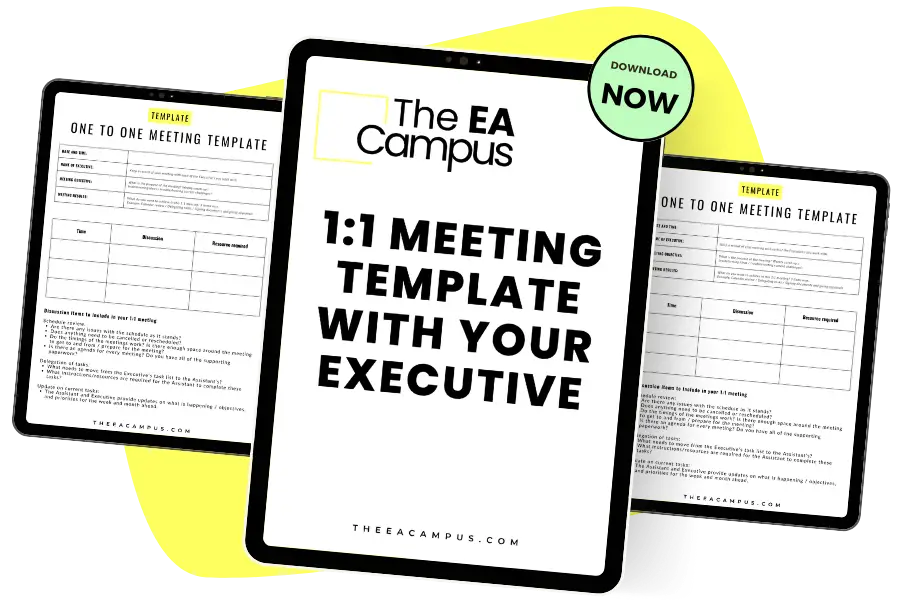
The 1:1 Meeting Template for Executives and Assistants gives you the steps to ensure that when you have a one-to-one meeting with your Executive, you get through all the work you need to cover and maximise your time together.
This is a great place to start when thinking about micro-behaviours that build Executive trust. Listening fully is a skill in and of itself, but in this instance, listening before you do anything else really does build trust. People feel seen and heard when the person they are interacting with is entirely focused on them and not distracted.
In practice, this shows up when you pause before replying or when you jump straight in to make a decision. Another clear sign that you are listening is to ask one or two clarifying questions rather than making assumptions. Then you reflect priorities so your Executive knows you understood the brief. These micro-behaviours that build Executive trust reduce rework and prevent avoidable mistakes, which, in turn, lead to fundamental trust in your partnership.
You can display this behaviour when triaging inboxes, taking meeting notes, or handling last-minute requests. Micro-behaviours that build Executive trust here include confirming the urgency of the request or sense-checking the expectation before you go ahead and work on the project or task you’ve been assigned. Here are a few practical ways to put this into practice:
This is where micro-behaviours that build Executive trust become very visible very quickly. When you follow through on small commitments, you show reliability without saying a word, which is really powerful. When you consistently do what you said you would do, your Executive no longer has to hold the task in their head, unsure whether to delegate it to you or do it themselves.
In practice, I know this is hard to do consistently especailly when you are busy, but actually start with the small things, it makes a hiuge difference. Sending the document when you said you would. Making the introduction you promised. Confirming a booking has been completed. These micro-behaviours that build Executive trust create confidence because they remove mental load, and honestly, being helpful and taking away the small things that play in the back of your Executive’s mind, makes a huge difference.
The Micro-behaviours that build Executive trust here are really consistency rather than anything else. Practical ways to put this into practice include:
This is one of the micro-behaviours that quickly helps EAs build Executive trust, and actually often separates what could be a transactional EA relationship from a really trusted one. Executives build trust when they see you making sensible, informed decisions without needing constant reassurance or approval.
In practice, this means making calls based on the information you have gathered, understanding the context rather than asking for sign-off at every step, or having a good knowledge of the business and your Executive’s goals. Or, deciding what can wait, what genuinely needs escalating, and what you can resolve independently using your Executive’s known preferences. Over-checking, even when well-intentioned, can be a sign that you are uncertain about the work, which is likely to make your Executive feel the same. It’s a balance: asking good, impactful questions is the right approach, but you don’t want to ask for approval at every stage of the process. Micro-behaviours that build Executive trust here show that you understand the expectations, the risks around your decision, and its impact.
This is particularly relevant when prioritising meetings, managing access to your Executive, or handling competing requests. Practical ways to put this into practice include:

Many micro-behaviours that build Executive trust come down to visibility. Trust can erode really quickly when an Executive feels unsure where things stand, even if work is progressing well.
We write alot about visiblity in the EA role and it really impacts trust and relationship building. You can build trust through visibility in a simple way – how and when you share updates with your Executive. Short, timely check-ins with your Executive are really impactful, as are early conversations when things are shifting or a problem is on the horizon. The timing of your communication and the way in which you update your Executive are more valuable than polished summaries after the fact. Micro-behaviours that build Executive trust remove uncertainty and reduce the need for follow-up questions.
Making sure you are visible in every aspect of your role is incredibly important, but in this case, it applies to projects, ongoing tasks, and shifting priorities. Practically, this looks like:
This one is super important. Micro-behaviours that build Executive trust are often tested most when something goes wrong, and how you respond in these moments can have a disproportionate impact on trust. Mistakes are bound to happen; we work in high-level, sometimes high-stakes roles. The only way you learn and grow in the role is to challenge yourself, and with that, occasionally, a mistake will come. It’s true to say that, because of the nature of the role, this can knock your Executive’s confidence in you; it shouldn’t, but it would be untrue to say that it won’t (not always, but it can)
So, how you respond in these circumstances is important. Acknowledge the issue quickly, take responsibility for its impact, and focus on resolving it. Avoid being defensive or over-explaining the issue, work towards a solution that you can present to your Executive. Micro-behaviours that build Executive trust prevent small issues from becoming larger ones. Here are a few more tips on bouncing back from a mistake so that trust is kept intact:
This is one of those micro-behaviours that build Executive trust, often going unnoticed until it is missing. When the way you work fits naturally with how your Executive thinks and communicates, the relationship feels a lot easier, because let’s face it – people build trust with people with whom they have things in common. If your work styles are similar, or you communicate in a similar way, that’s half the battle won. When you’re not in sync or you can’t quite align on how you work, even really small tasks can cause friction.
So, how do you work on this behaviour? The starting point is paying attention. How much detail do they want? How often do they want updates? Do they prefer a quick message, a structured summary, or a conversation? Micro-behaviours that build Executive trust here come from adjusting your approach based on what actually works for them, not what works best for you.
You’ll notice this in the detail. How much context do they ask for? Whether they skim or read closely. If they prefer a quick Slack message, a structured email, or a short conversation. Micro-behaviours that build Executive trust here come from paying attention and adjusting, rather than sticking rigidly to one way of working.
Over time, this becomes a really solid form of trust-building. Your Executive doesn’t need to explain themselves repeatedly because you’ve learned how they like to work. A few ways this often shows up day to day:
One of the clearest signals of trust is how confidently you protect your Executive’s time. When it comes to managing their schedule, you want to move past simply scheduling a meeting and instead understand what deserves their attention and what can wait.
How do you demonstrate this behaviour? Start by looking at how requests are filtered and how you handle interruptions. Saying yes to everything creates a huge number of distractions for your Executive and ultimately a lot of pressure on their time. When you plan their schedule with thought and intent, you create space and a sense of calm. Micro-behaviours that build Executive trust here are highly visible and appreciated.
This becomes especially important during busy periods, when everything feels urgent. Your ability to pause, assess impact, and make a call reduces pressure for both of you. This often looks like:
Trust isn’t built by staying quiet. It’s built when you speak up in a way that helps your Executive see something sooner or more clearly. This behaviour, again, is a skill, built on noticing things and being observant, so that you can talk with confidence and an understanding of what is important. You are not just speaking for the sake of it. So look for patterns, risks, or tensions and speak about what you’ve seen and how you might implement a process or change. Avoiding speaking up can feel easier in the moment, but over time, especially if an issue is in your wheelhouse and you didn’t mention it, it can leave your Executive wondering why you didn’t raise it. The strongest interventions are often simple and well-placed. A question was asked early, or a concern was raised thoughtfully. You’ll see this in moments like:
Executives tend to trust decisions they can follow. When your actions consistently align with what matters most to them, trust builds almost effortlessly, or at least a lot quicker.
This behaviour manifests itself in how you prioritize work and explain any changes you’ve made. When something moves down the list, your Executive understands why. When something jumps the queue, the reasoning makes sense. Micro-behaviours that build Executive trust here are as much in the explanation as in the action itself. This is most noticeable on those really busy days, when trade-offs are just going to happen. If you are clear on your thinking, even if it was the wrong move, your Executive will follow your process, and all you need to do is adjust rather than risk a trust issue. In everyday work, this often looks like:
Some of the most important micro-behaviours that build Executive trust happen when there’s no immediate pressure and no audience – which I know isn’t often, but it’s a great way to show you always operate with integrity, and it’s core to who you are as a person.
Integrity is reflected in how you handle information, how you talk about people when they’re not in the room, and how consistent you are across situations. These moments don’t attract a huge amount of attention, but they shape how safe and reliable you feel as a partner. Over time, this creates a steady foundation of trust rather than isolated moments of reassurance. You’ll notice this in things like:
Micro-behaviours that build Executive trust create momentum. Over time, they lead to fewer check-ins, broader autonomy, and more influence.
As these behaviours repeat, your Executive starts checking in less, delegating more freely, and giving you greater scope to make decisions without running everything past them first. What changes is not a single moment of confidence in but a learned behaviour on their part that has been built over time. Your Executive begins to rely on how you think and how you operate, rather than on rigid processes or constant oversight. That’s how micro-behaviours that build Executive trust compound over time. If you would like to learn more about building trust and a strong partnership with your Executive, check out our Strategic Business Partner Online Course.
Share this article:
Join 30,000+ Assistants receiving our carefully crafted weekly newsletter packed with valuable tips, tricks, and insights tailored specifically for Assistants like you.